
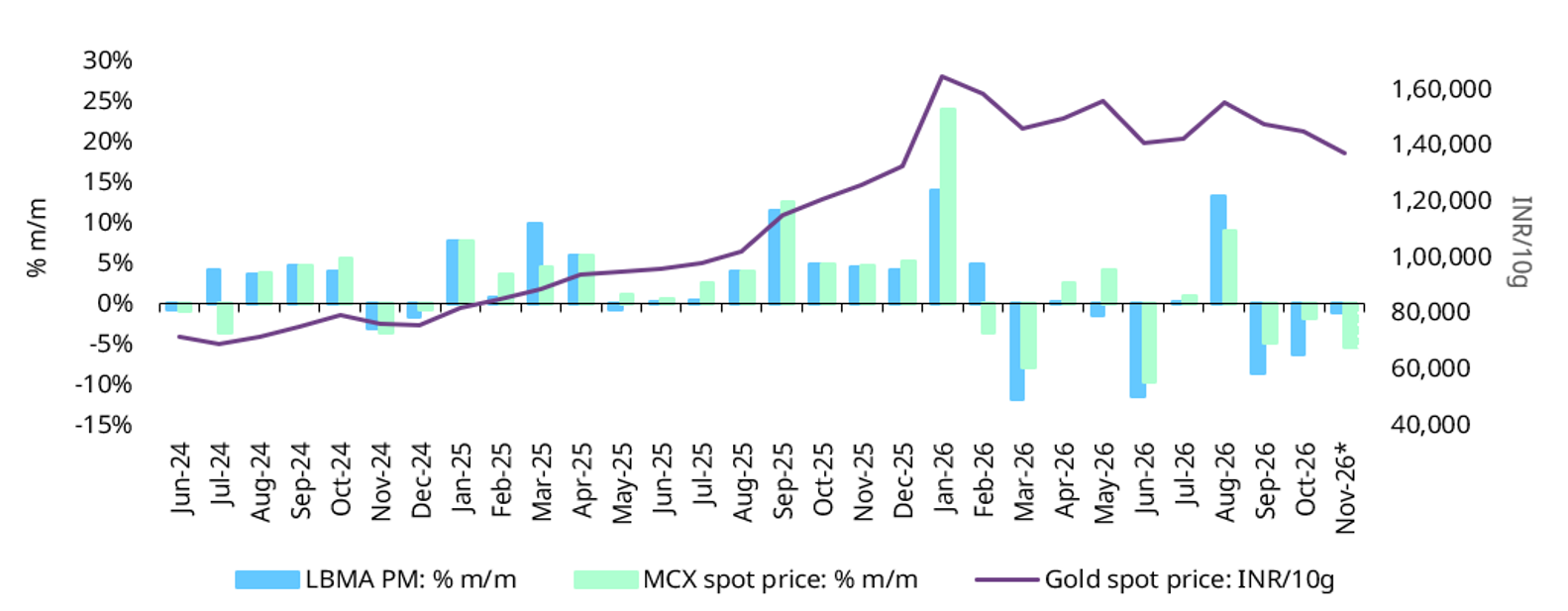
Indian bullion opened sharply lower on 18 November 2026. Data from the Indian Bullion and Jewellers Association showed 999 gold at ₹1,31,505 per 10 grams, against a previous close of ₹1,34,201. Silver opened at ₹1,64,506 per kg, down from ₹1,69,171. That gold print is close to a one-year low and well under January’s peak near ₹1.81–1.85 lakh per 10 grams. If you own bangles, a chain, or coins, the screen rate is the number that resets their gold-content value.
What changed overnight
The move was not a local festival story. A firmer US dollar and talk of further US interest-rate increases pulled international gold down with it. On the same morning, spot gold was trading near $3,797 an ounce, its lowest in about 14 months. In India the rupee price still matters more than the ounce quote, because jewellery is billed per gram. A drop of ₹2,696 per 10 grams in a single session is ₹269.60 per gram of 999 gold. On a 40-gram 22K necklace, that one-day move is already a few thousand rupees of gold value.
Turn the 10-gram rate into a per-gram karat rate
IBJA quotes 999 fineness, which is the 24K reference. Divide by 10 to get the per-gram rate, then scale by karat. Using the 18 November open:
- 24K (999): ₹1,31,505 ÷ 10 = ₹13,150.50 per gram.
- 22K (916): ₹13,150.50 × 22/24 = ₹12,054.63 per gram.
- 18K (750): ₹13,150.50 × 18/24 = ₹9,862.88 per gram.
- 14K: ₹13,150.50 × 14/24 = ₹7,671.13 per gram.
Gold content value is that rate times weight. A 20-gram 22K bangle is 20 × ₹12,054.63 = ₹2,41,093 of gold. The same bangle at the previous close (₹1,34,201 per 10 grams, or ₹12,301.76 per gram of 22K) was about ₹2,46,035. The metal is worth roughly ₹4,900 less on paper after one session. Making charges and GST do not move with the bullion open. They sit on top when you buy, and they are usually not refunded when you sell.
Buyers are staggering, not clearing the tray
Trade desks quoted by BusinessLine said the correction may bring jewellers and wedding buyers back, but households are choosing selective, staggered purchases rather than bulk buying. That fits a rate that is cheaper than January and still far above last year’s festive levels. If you are booking a wedding set in parts, price each parcel on the day you pay. A rate locked in a quote from last week is already stale after a ₹269-per-gram move.
What the jeweller will actually pay
The IBJA open is a reference, not a buyback promise. Refiners and retailers pay under the screen rate to cover melting loss, assay risk, and their margin. For a sale, ask for the buy rate for your hallmark (916, 750, or 999) and multiply by net weight after stones. For a purchase, use the sell rate plus making charges and 3% GST. Our gold karat calculator takes the per-gram rate you were quoted, so you can run both numbers on the same weight.
- Read the hallmark and weigh the piece, or use the weight on the invoice.
- Convert today’s 999 rate per 10 grams into a per-gram rate for that karat.
- Multiply rate by weight to get gold content value.
- For a new bill, add making charges and GST. For a sale, use the jeweller’s buy rate, which will be lower than IBJA.
At the 18 November 2026 open, 999 gold is ₹13,150.50 a gram and 22K is about ₹12,055 a gram. Revalue with that rate, then ask what the counter will actually pay.
— Gold Karat Calculator
Summary
The 18 November open put 999 gold at ₹1,31,505 per 10 grams, near a one-year low and far below the January peak. Scale that rate by 22/24 or 18/24 before you multiply by weight. Enter the per-gram figure in the gold karat calculator on the day you buy, sell, or insure, because a single session has already moved 22K jewellery by hundreds of rupees per gram.