
The October–December quarter brought footfalls back to Indian jewellery stores after months of sticker shock. Crisil Ratings, looking at 76 organised retailers that account for about a third of industry revenue, said a higher share of visitors were actually buying. The Economic Times report on 6 November 2026 tied that to prices cooling from the year’s highs — spot gold had topped $5,500 and later dipped under $4,000 — plus the start of the wedding season. The shape of the purchase changed. People wanted in, at a size they could pay for.
What the trade is seeing
Samit Guha, CEO of MMTC-PAMP, said interest in smaller gold coins and bars lets buyers take part at a more accessible ticket. At these prices, households are making considered purchases instead of committing to a large set at once. Metals Focus consultant Harshal Barot said volumes for the year will still struggle to match last year, because jewellery has been getting lighter and 18K, 14K, and 9K are a larger share of sales. The World Gold Council expects India’s gold imports in 2026 to fall to a six-year low. Demand was slow for much of the year after the import duty rose to 15% in May and retail rates hit records.
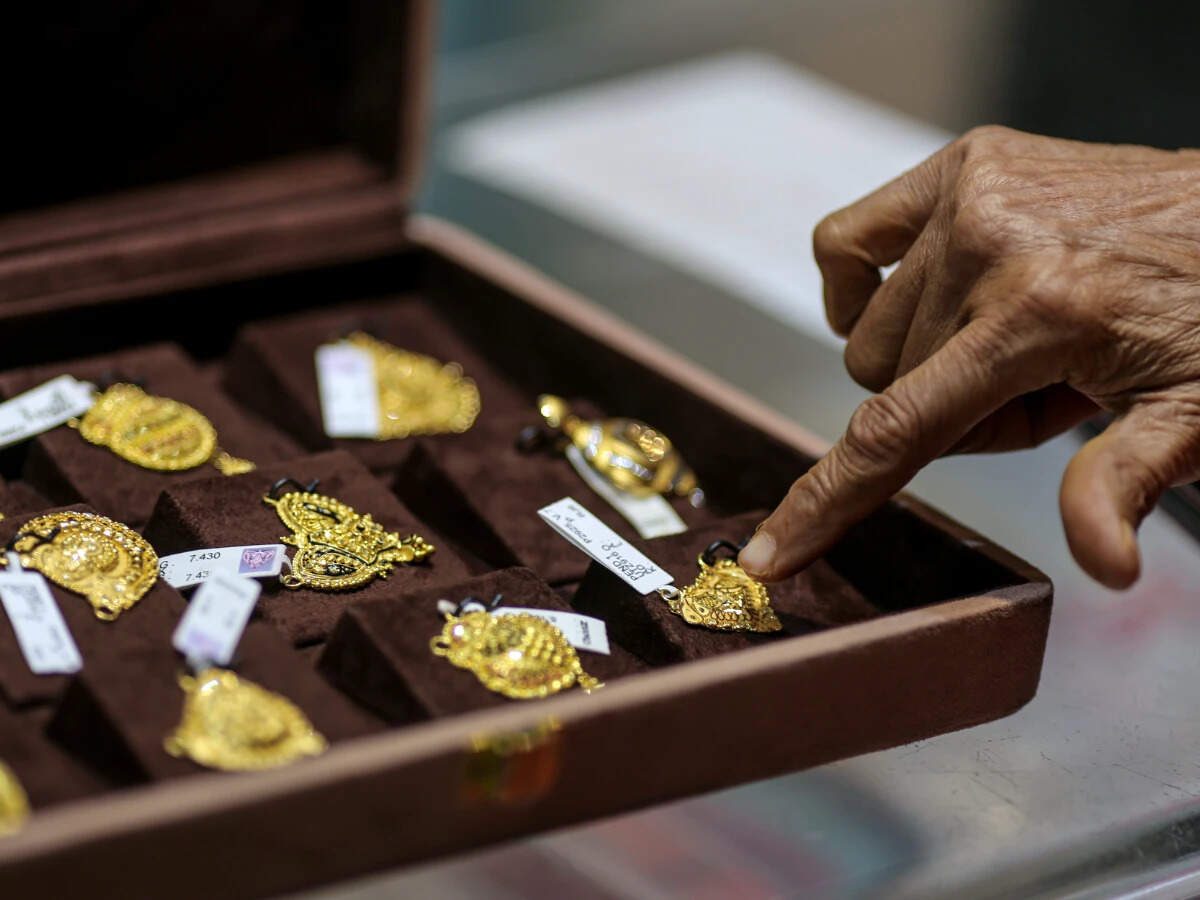
Same ₹1 lakh, two very different grams
Use the 18 November 2026 IBJA open as a clean reference: 999 gold at ₹13,150.50 per gram, so 22K is about ₹12,054.63 per gram. A ₹1,00,000 budget behaves differently in each aisle.
- 24K coin, charged near the metal rate: about ₹1,00,000 ÷ ₹13,150.50 ≈ 7.6 grams. Many mints add a small premium and 3% GST, so the metal you take home is a bit less.
- 22K chain with 10% making and 3% GST: the all-in rate is about ₹12,054.63 × 1.10 × 1.03 ≈ ₹13,658 per gram. ₹1,00,000 buys about 7.3 grams.
- 22K piece with heavy handmade charges at ₹1,500 per gram: you may get under 6 grams of 22K for the same money, because making is a large slice of a small ticket.
Coins win on fine-gold weight. Jewellery wins if you need something to wear to a wedding next month. Neither is “cheaper gold” in purity terms until you write down grams of pure metal. A 7.6-gram 24K coin contains 7.6 grams of fine gold. A 7.3-gram 22K chain contains 7.3 × 22/24 ≈ 6.7 grams of fine gold. The gap is the making charge and the alloy.
How to run it in the calculator
For a coin or bar, set purity to 24K, enter the gram rate the seller quoted (including their premium if it is built into the rate), and set making charges to zero or to the mint charge if it is listed separately. For jewellery, set 22K or 18K, enter making as a percent or per gram, and leave GST on. The gold karat calculator shows gold value and the full bill side by side, which is the comparison that matters when the ticket is small and every rupee of making buys less metal.
A smaller ticket is still a purity-and-weight sum. Coins maximise fine gold. Jewellery adds making charges you pay for design.
— Gold Karat Calculator
Summary
Cooler prices in late 2026 brought buyers back, and a large share of them chose coins, bars, and lighter jewellery. Imports are still expected to be the weakest in six years. Before you pick an aisle, divide your budget by the all-in rate per gram in the gold karat calculator and compare fine-gold weight, not just the rupee figure on the tag.